


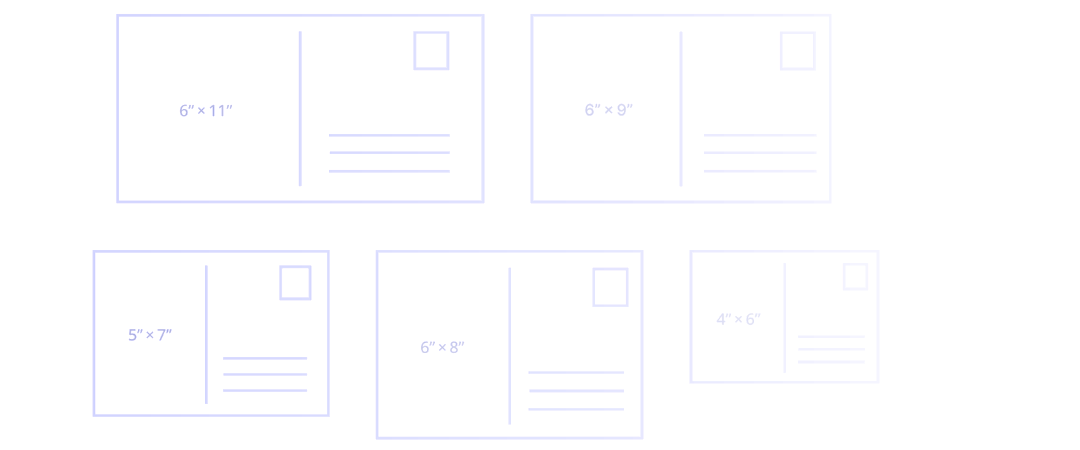
Postcard size might seem like a small detail when planning a direct mail campaign, but it plays a much larger role than most businesses expect.
While it may appear to be purely a design choice, postcard dimensions affect printing costs, postage rates, mail handling, layout flexibility, and how noticeable your message is in the mailbox.
Choosing the right size early can prevent costly surprises and help your campaign perform better. At Metzgers, we regularly guide businesses through these decisions because postcard size can influence the success of an entire mailing strategy.
If you're planning a mailing campaign, understanding how postcard size works can turn a simple design choice into a strategic advantage.
Common Postcard Sizes for Direct Mail Campaigns
Postcards can technically be printed in many sizes, but in reality, a handful of standard postcard dimensions are used most often. These sizes are common because they work well with printing equipment, mailing systems, and typical marketing goals.
4 x 6 Postcards
The 4 x 6 postcard is one of the most widely used postcard sizes.
This format remains popular because it is efficient to print and often qualifies for USPS postcard postage rates, which can keep mailing costs lower.
A 4 x 6 postcard works well for:
🔹Appointment reminders
🔹Event announcements
🔹Short promotional messages
🔹Simple direct mail campaigns
The trade-off is visibility. Because this size is common, it may not stand out as much in a stack of mail.
4.25 x 5.5 Postcards
A 4.25 x 5.5 postcard offers a little more design space while still maintaining a compact feel.
Businesses often choose this postcard dimension when they want:
🔹Slightly larger imagery
🔹More breathing room for text
🔹A piece that feels more intentional than the smallest standard size
This size can often be printed efficiently while still maintaining reasonable mailing costs.
Mid-Size Postcard Dimensions for Marketing Campaigns
Mid-size postcards offer a balance between visibility and efficiency, making them a popular choice for many marketing campaigns.
5 x 7 Postcards
A 5 x 7 postcard provides noticeably more space for design elements and messaging.
This size is commonly used for:
🔹Promotional mailers
🔹Product announcements
🔹Service highlights
🔹Brand awareness campaigns
The extra room allows for stronger headlines, better imagery, and improved readability.
5.5 x 8.5 Postcards
The 5.5 x 8.5 postcard is another common direct mail format.
This size offers:
🔹More space for storytelling
🔹Clearer product visuals
🔹Better layout flexibility
Many businesses choose this size when they want a professional look without jumping to the largest formats.
Large Postcard Sizes That Grab Attention
As postcard dimensions increase, so does their ability to stand out in the mailbox.
However, larger postcards can also influence postage costs and production planning, so it's important to evaluate them carefully.
6 x 9 Postcards
A 6 x 9 postcard is widely used in direct mail marketing because it balances impact with cost.
This format is often used for:
🔹Customer acquisition campaigns
🔹Seasonal promotions
🔹Service introductions
The larger footprint makes it harder to ignore.
6 x 11 Postcards
The 6 x 11 postcard is one of the largest standard postcard sizes that still mails efficiently in many campaigns.
This size offers:
🔹High visibility in the mailbox
🔹Ample room for images and messaging
🔹Strong presence for promotional campaigns
8.5 x 11 Jumbo Postcards
An 8.5 x 11 postcard creates maximum visual impact.
However, this size typically requires more planning because it affects postage classification and printing efficiency.
Jumbo postcards are best used when:
🔹The campaign message requires significant space
🔹The marketing goal justifies higher mailing costs
🔹The design needs strong visual impact
How Postcard Size Affects Printing and Postage Costs
Many businesses assume that printing larger postcards is the main cost difference. In reality, postage often has a greater impact on the overall budget.
Postcard vs Letter Mail Classification
USPS pricing is determined by classification, not just appearance.
A postcard that meets certain size and thickness requirements may qualify for postcard postage rates. If it exceeds those limits, it may be classified as a letter, which can increase mailing costs.
This is one reason why consulting a printing and mailing expert early can help protect your budget.
Printing Efficiency and Paper Usage
Printing costs are also affected by production efficiency.
Commercial printers consider:
🔹How many postcards fit on a press sheet
🔹Paper waste during cutting
🔹Handling and finishing steps
Two postcard sizes that look similar may have very different costs simply because one fits production workflows better.
If you're exploring postcard printing for a campaign, working with an experienced printer like Metzgers can help ensure your design aligns with efficient production.
Mailing Preparation and Automation
Mail preparation also plays a role in postcard sizing decisions.
These factors can all interact with the postcard format:
🔹Address placement
🔹Barcode positioning
🔹Automation compatibility
🔹Mailing list processing
When size decisions are made early, these steps tend to go much more smoothly.
How to Choose the Best Postcard Size for Your Marketing Goals
The most effective way to choose postcard dimensions is to start with the purpose of the campaign.
Choose Smaller Postcards When:
- The message is short and direct
- Budget efficiency is the priority
- The mailing needs to move quickly from concept to mailbox
Choose Mid-Size Postcards When:
- Readability matters
- You need space for visuals
- The campaign focuses on awareness or promotions
Choose Larger Postcards When:
- Visibility is critical
- The campaign targets new customers
- The message benefits from a stronger visual presence
Larger postcards can be very effective, but bigger does not always mean better. The best results happen when postcard size aligns with messaging, mailing strategy, and budget.
Why Working with a Printing Partner Makes a Difference
Many postcard projects run into problems when design decisions happen before mailing requirements are considered.
At Metzgers, we help businesses think through these details early to avoid issues such as:
🔹Postcards accidentally qualifying for higher postage rates
🔹Layouts that conflict with postal barcode placement
🔹Designs that require costly revisions late in the process
As our team often tells clients:
"Postcard size isn't just a design decision. It's a production and mailing decision that affects the entire campaign."
By planning postcard size early, businesses can reduce revisions, control costs, and keep campaigns running smoothly.
Frequently Asked Questions About Postcard Sizes
What is the standard postcard size for direct mail?
The most common standard postcard size is 4 x 6 inches. This format often qualifies for USPS postcard postage rates and is widely used for reminders, announcements, and simple promotional mailers.
What is the best postcard size for marketing?
The best postcard size depends on your goal. 5 x 7 and 6 x 9 postcards are popular for marketing campaigns because they provide strong visibility while maintaining efficient printing and mailing costs.
Do larger postcards perform better in direct mail campaigns?
Larger postcards often attract more attention in the mailbox, which can improve response rates. However, the most effective postcard size depends on the campaign message, mailing strategy, and budget.
Can a printing company help choose the right postcard size?
Yes. Metzgers can help evaluate postage requirements, printing efficiency, and campaign goals before design begins. This ensures your postcard size supports both marketing performance and cost control.
If you're planning a direct mail campaign and want guidance on postcard printing, sizing, or mailing strategy, Metzgers can help you evaluate options and avoid common pitfalls.
